
.jpg)






When you’re choosing timber for your next project, you may notice products labelled with FSC® or PEFC™ certification....
Latest posts
-
 FSC® vs PEFC™ Certifications - What Do They Mean?Read more
 -
 What are sawdust briquettes and are they the right product for your needs?Read more
Discover what Sawdust Briquettes are, how they compare to traditional firewood and whether they’re the right fuel for...
-
 How to Build A Raised Garden Bed: A Beginner's GuideRead more
Learn how to build a raised garden bed with our step-by-step guide. Discover the best timber for raised beds, what...
-
 The Bank Holiday Garden Projects Worth Starting (And the Ones That Can Wait)Read more
If any garden project deserves a place at the top of our 'best bank holiday weekend projects' list, it is surely...
-
 Understanding Timber Grades: What Does It Mean for Your Project?Read more
In our experience in dealing with different kinds of timber and the various grades, we have learned one thing:...
-
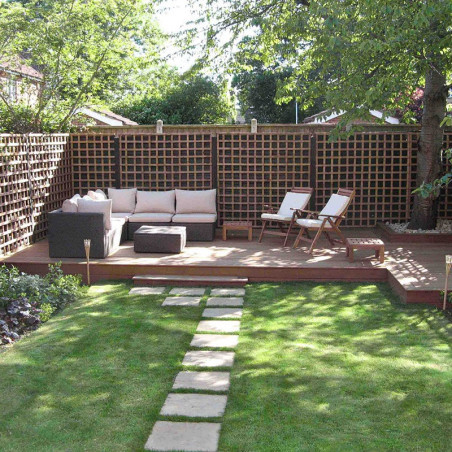 Planning Your Garden Projects: What to Tackle First This SpringRead more
After over 100 years in the timber trade, we've picked up a few key things. One thing we've learned is the sequence...
-
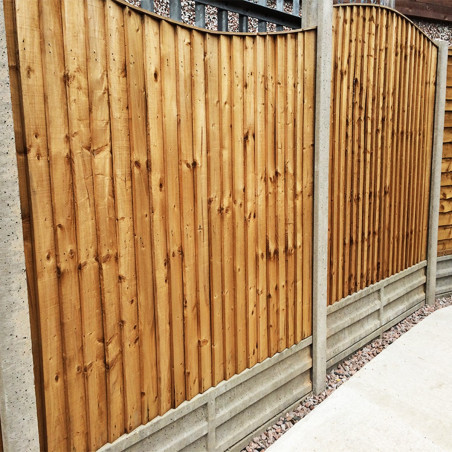 Why Concrete Fence Posts Last 50+ Years (And When They're Worth It)Read more
a concrete fence post installed today will still be standing strong in fifty years, and probably longer. We've seen...
-
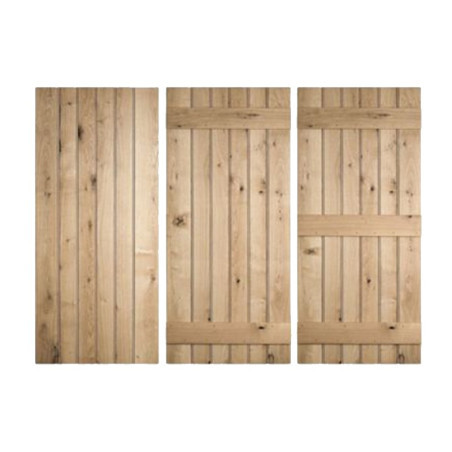 Why Solid Oak Doors Keep Your Home Warmer This WinterRead more
After over 100 years manufacturing timber products in our workshop, we've learned something that most homeowners...
-
 Should You Paint Skirting Boards Before Walls?Read more
The short version? Paint your walls first, then the skirting. But like most things in our trade, the devil's in the...
-
 What are Landscaping Screws?Read more
A typical landscaping screw has a polymer and/or ceramic coating that can withstand the weather in Britain longer...
Blog categories
Search in blog
Planning Your Garden Projects: What to Tackle First This Spring
Here at UK Timber, late March is the time of year we receive a certain type of phone call. Someone's been staring at their garden for the last few months, and now the weather's starting to improve, they want to get on and do everything at once. Decking, fencing, raised beds, a pergola, and maybe even sort out the shed roof...!
After over 100 years in the timber trade, we've picked up a few key things. One thing we've learned is the sequence in which you tackle your garden projects is just as important as the projects you tackle.
Let's share a few things we've picked up from decades of supplying both DIY enthusiasts and trade customers.
Why Spring Timing for Your Projects Actually Matters
There's a lot to be said for the urge to get started this late in March. The weather's starting to improve, the ground's warming up, and the longer days do give a sense of momentum to getting things done.
However, not all projects benefit from the early start. In fact, some projects can be left until May or even June without a detrimental effect.
The Projects That Reward an Early Start
Fencing First (Especially if Replacing Rotten Posts)
If your garden fencing is on its last legs, this should be top of your list. Here's why: fencing gives you boundaries for your garden, provides you with some much-needed privacy, and shields your other projects from the elements and prying eyes.
If you replace your fencing nice and early in the season, you'll then be free to get on with the rest of your garden without the worry of prying eyes or the weather causing damage to your new plants. And if you're waiting for the ground to dry out for other jobs, you'll still have time to get your fence up.
The common mistake we see people making is that they put off fencing until the end because it's a practical job rather than a cosmetic one. Then they spend the whole summer working in a garden with no fences for privacy, or the fencing gets damaged in the spring winds and ends up destroying their new raised beds.
If you have fence posts that need replacing, then March and April are a great time to get this done. The ground is workable, but it's also not too hard, unlike the ground in the height of summer.
If you're doing some decking work, then March and April are a great time to get the substructure done.
Decking Substructure (Even If You're Not Finishing Until Later)
If you're doing some work on your decking, then March and April are a great time to get the substructure done: the joists, bearers, and foundation that are hidden beneath the visible decking boards.
Of course, this is also where many people go wrong. They leave it until June when they want to use their new deck, but then realise it takes longer than two or three weekends. If you start the groundwork in early spring, you can take as long as you need making sure everything is correct, allowing time for treated wood to acclimatise, etc.
The actual decking boards can be fitted at a time of your choosing, but having this done early takes a lot of pressure off. We've provided materials for people who've constructed their deck base in April, let it all settle, and then constructed their boards in May when they had a long weekend. Much more relaxing than having to do it all within three days.
If you're making a sub-structure, pressure-treated joists are a must. This is not an area of your build where appearance is important, so don't worry about finding attractive wood. Just worry about it lasting for many years and not rotting from ground moisture.
Raised Beds (Before Planting Season Starts Properly)
Raised beds are another project that can really benefit from being done early. If you construct raised beds in March or early April, you can fill them, let everything settle, and then plant in late April or May when it's more suitable for whatever it is you're planting.
If you leave it until May, you'll be rushing to construct raised beds, but also rushing to ensure you're planting at the correct time. We've seen people try and construct raised bed kits with one hand, while holding seed packets in the other, and it's just not easy.
The wood for raised beds, usually railway sleepers or planter kits, should ideally be in place a few weeks before you fill them. This ensures that joints are not disturbed when you fill them, and you're not working on freshly filled beds.
Another tip from our workshop: If you're using oak sleepers for raised beds, it's a good idea to start early. Oak takes time to weather and stabilise, and if you start in March, come June, they'll have acquired their silvery finish rather than looking like new.
The Projects That Can Wait (Without Penalty)
Pergolas and Garden Structures
Pergolas don't need an early start unless you're doing a whole garden renovation, in which case you're working around them anyway. The wood, whether larch beams, oak, or special pergola kits, won't benefit from going up in March rather than May.
In fact, it's arguable that it's better not to start until May or June. That way, you can immediately plant climbers, which will grow in during the summer. If you start in March, you'll be looking at a bare pergola for months, waiting for planting weather.
Of course, if you are doing a whole garden renovation, it makes sense to start early. You can work around it when you do other projects at ground level. It's just a standalone pergola project that can wait.
Cladding and Aesthetic Timber Projects
Garden building cladding, whether it's re-cladding a shed, updating a summer house, or featheredge boarding an outbuilding, can be done at any time during spring and summer.
This work does not interact with ground conditions, does not require concrete to set, and is unaffected by the weather in March compared to June. Indeed, doing this work in May and June makes sense for a different reason: pleasant weather with warmer temperatures, drier conditions, and longer days makes for a nicer experience.
Unless your building is in a state of disrepair and desperately needs weather-tightening, these cosmetic improvements can be left for later.
Paths and Paving (Unless They're Essential Access)
Paths and paving tend to be done last in an ideal project order. Why? Because almost every other project involves moving stuff around on them, and you do not want to be moving barrows of soil, bags of postcrete mix, and/or timber sleepers over your newly laid paths and paving.
Finish with your raised beds, decking, and fencing before tackling paths and paving. It will be easier to keep them clean and avoid damaging them.
The only time paths and paving should be done early is if they provide essential access to your work area. Do you need to cross muddy fields repeatedly to get to your project area? Then yes, laying down some boardwalks or permanent paths makes sense. Otherwise, leave them till later.
The Sequence That Actually Works
From what we have seen work well for our customers over the years, here is a sensible order for common spring garden projects:
Week 1-2 (Late March/Early April):
- Assess and repair or replace the fencing
- Install fence posts if necessary
- Commence any work that involves the laying of concrete (decks, foundations, etc.)
Week 3-4 (Mid-April):
- Construct decking substructure if applicable
- Construct raised beds
- Heavy work involving the leveling of the ground, etc.
Week 5-6 (Late April/Early May):
- Install decking
- Complete any remaining work
- Commence planting in the raised beds
Week 7+ (May and beyond):
- Cladding, decorative work, etc.
- Paths, paving, etc.
- Miscellaneous work, planting, etc.
Again, this is not set in stone, and your individual circumstances may dictate that you do things differently, but this gives you a basic idea of the order of operations, prioritising the urgent and essential work, and then moving on to the finishing work.
What Professional Landscapers Do Differently
We sell to many trade customers, and as such, they have a different mindset to the average DIY customer, which is something that the DIY customer can also benefit from, namely:
They order early: We have trade customers who are ordering materials as early as March to be delivered in April and May, meaning that they are not waiting around for materials to be delivered, and are able to have first choice of materials rather than being left with the leftovers.
They prepare all the sites before starting work: Rather than completing one job, then moving on to the next, they will prepare all the sites before starting work on any of the projects, meaning that they can move between projects as the weather and their schedule dictate rather than being forced to work on one site because that is where they have to be.
They batch similar work: If they have to install posts for both fencing and a pergola, they'll install all the post work at once. It's the same tools, same concrete mix, same approach. Easier than jumping between different types of work.
They protect completed work: Landscapers will board over newly laid decking, rope off new raised beds, and so on. It's something DIYers rarely think about until they've put a wheelbarrow scratch across new boards.
The Materials Reality Check
This is something we always tell people who are planning several projects for next spring. The cost of materials can mount up surprisingly fast, and there can also be a problem of availability, especially during the spring season.
If you are planning several projects, such as fencing a 30-meter boundary, making a 4x4-meter deck, and making three large raised beds, you are looking at a substantial bill for materials. It's also worth working out a budget before you start, so you don't find yourself halfway through fencing, for example, and discover you've run out of cash for posts.
Also, it's worth noting that new oak sleepers or specific sizes of treated decking can have lead times during peak season. It's a good idea to order early, even if you are not ready to start work, so that you can be sure of having materials when you need them.
As for storage, timber is usually fine outside, provided it is stacked correctly and covered. It's also worth noting that it's usually better to have materials delivered early, even if you are not going to start work for a few weeks. It's better to have timber acclimatising in your garden than delay a project waiting for delivery.
The Weather Wildcards
This is where the unpredictability of the British weather comes in, which is precisely the point of doing this. Some work will be possible even in the rain, some will not be possible at all.
Rain-tolerant work: Installing fence posts, groundwork, heavy structural work. It's not pleasant work in the rain, but it is possible.
Rain-sensitive work: Concrete work, applying finishes, installing decking boards. This work will not be possible in the rain, as wet concrete, timber, and slippery decks are all dangerous.
By doing the rain-tolerant work in March and April, you will not be held back by the weather. The rain-sensitive work, which requires a break in the weather, will be done in May and June, when the weather is hopefully drier.
When to Actually Call It and Wait
Not all weather is bad enough for work to be done, however. If the ground is really bad, waterlogged, frozen, or just too muddy, don't bother. It will only cause problems.
Fence posts will not set in waterlogged clay, decks will not settle properly in wet ground, and timber will warp if fixed in place in the rain and then dry out as they dry.
Preparation work is fine, but actual work should be delayed until the weather improves.
My yard crew usually knows when someone is trying to work in bad conditions. They call asking how to work in the mud, or if posts will set in the ground when it's wet. The answer is usually "they might, but you'll get better results waiting a week."
The Project That Changes Everything
Finally, if you are planning to undertake a major renovation, i.e., completely remodelling the garden, adding significant structures, etc., the sequence of tasks changes entirely.
In the case of major renovation projects, customers may benefit by arranging for the delivery of the structural timber well in advance, to be drawn upon as required during the course of the project.
Making Your Plan
Take some time now, in late March, to plan out exactly what you want to accomplish before the summer.
Be realistic about the amount of time involved, as most garden projects take longer than you anticipate, especially if you are a first-time customer.
Prioritise the structural work for April, and the finishing work for May and June.
Leave some leeway in the plan for the inevitable problems that will arise, as both will be present.
And don't forget to order materials well in advance, as we are already starting to see the spring rush arrive at the yard, and certain materials, such as treated fence posts and decking, tend to sell out once April arrives.
Ready to Start Planning?
Take a look at the full range of garden timber products that are available, or give us a call on 01536 267107 to discuss your requirements and plan out the sequence of tasks that you need to accomplish.
The garden of your dreams, ready for summer, begins with planning in the spring, and the correct sequence of tasks to complete the job means that you will be enjoying the results while others are still struggling to install their fence posts in July.
Related posts
-
 4 REASONS WHY COMPOSITE DECKING IS A WORTHWHILE INVESTMENT
Read more
4 REASONS WHY COMPOSITE DECKING IS A WORTHWHILE INVESTMENT
Read more
-
 OAK FLOORING VS PINE FLOORING - WHICH ONE WINS?
Read more
OAK FLOORING VS PINE FLOORING - WHICH ONE WINS?
Read more
-
 4 REASONS WHY COMPOSITE DECKING IS A WORTHWHILE INVESTMENT
Read more
4 REASONS WHY COMPOSITE DECKING IS A WORTHWHILE INVESTMENT
Read more
-
 THE ADVANTAGES OF USING OAK FOR HOME AND GARDEN PROJECTS
Read more
THE ADVANTAGES OF USING OAK FOR HOME AND GARDEN PROJECTS
Read more
-
 ENHANCE YOUR GARDEN WITH A PERGOLA OR TERRACE
Read more
ENHANCE YOUR GARDEN WITH A PERGOLA OR TERRACE
Read more