







When you’re choosing timber for your next project, you may notice products labelled with FSC® or PEFC™ certification....
Latest posts
-
 FSC® vs PEFC™ Certifications - What Do They Mean?Read more
 -
 What are sawdust briquettes and are they the right product for your needs?Read more
Discover what Sawdust Briquettes are, how they compare to traditional firewood and whether they’re the right fuel for...
-
 How to Build A Raised Garden Bed: A Beginner's GuideRead more
Learn how to build a raised garden bed with our step-by-step guide. Discover the best timber for raised beds, what...
-
 The Bank Holiday Garden Projects Worth Starting (And the Ones That Can Wait)Read more
If any garden project deserves a place at the top of our 'best bank holiday weekend projects' list, it is surely...
-
 Understanding Timber Grades: What Does It Mean for Your Project?Read more
In our experience in dealing with different kinds of timber and the various grades, we have learned one thing:...
-
 Planning Your Garden Projects: What to Tackle First This SpringRead more
After over 100 years in the timber trade, we've picked up a few key things. One thing we've learned is the sequence...
-
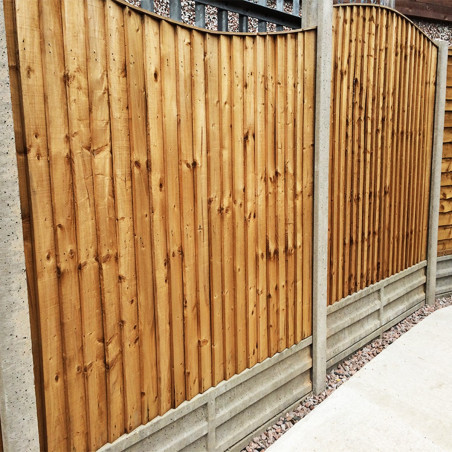 Why Concrete Fence Posts Last 50+ Years (And When They're Worth It)Read more
a concrete fence post installed today will still be standing strong in fifty years, and probably longer. We've seen...
-
 Why Solid Oak Doors Keep Your Home Warmer This WinterRead more
After over 100 years manufacturing timber products in our workshop, we've learned something that most homeowners...
-
 Should You Paint Skirting Boards Before Walls?Read more
The short version? Paint your walls first, then the skirting. But like most things in our trade, the devil's in the...
-
 What are Landscaping Screws?Read more
A typical landscaping screw has a polymer and/or ceramic coating that can withstand the weather in Britain longer...
Blog categories
Search in blog
Why Concrete Fence Posts Last 50+ Years (And When They're Worth It)
As you might expect from UK Timber, (a company that's supplied timber fence posts from its sawmill for over one hundred years) you might think that this post is about to take a rather unexpected turn. And you'd be right. It seems that, after all these decades working with fence posts, we've finally come to realise that, on some occasions, concrete fence posts really do make sense.
Not that we're knocking timber fence posts. We sell some of the best around, and most gardens in the UK will be perfectly happy with them. However, after all these years, there is one thing that's become very apparent to us, and that's that sometimes, when you're struggling to replace your third or fourth fence post due to rot, or your fence is on a particularly exposed hillside, or your garden is particularly wet; then you might want to consider something rather different.
So, let's take a look at why concrete fence posts can last for decades, and perhaps even outlast your mortgage, and most importantly, when they might be worth the extra cost.
What Makes Concrete So Special
The concrete fence posts that we offer, thanks to our relationship with FP McCann, may not be the most glamorous items, being grey, heavy, and looking rather industrial, but they do one thing that timber fence posts can never hope to match, and that's that they never, ever rot.
In fact, a concrete fence post installed today will still be standing strong in fifty years, and probably longer. We've seen concrete fence posts from the 1960s and 70s that still function perfectly. Simply, concrete does not rot, does not decay, and does not allow insects to take hold, nor water to penetrate. It's simply permanent.
That changes the equation entirely. Yes, concrete posts are about double the cost of timber posts to install. However, if you are changing timber posts every 15 years, and concrete posts will last 50+ years, concrete posts are a much cheaper option in the long term.
The figures are further improved if we consider the labour costs involved. Digging out old concrete-embedded timber posts and installing new ones is a time-consuming operation. Most people will end up paying someone to do it. With concrete posts, it is a one-off payment.
The Lightweight Revolution
Another problem with concrete posts has traditionally been their weight. Standard concrete posts are heavy. They are difficult to transport, difficult to manhandle into place, and a lot of work to install if you are a DIY enthusiast.
So, we are delighted to be able to stock the Fenn-Lite™ range of lightweight concrete posts. They are made using new technology to significantly reduce weight without compromising strength. They are still heavy, but manageable by two people rather than requiring a team of people and a crane.
For a DIY enthusiast, the ability to install a fence without having to hire a team of people is a massive factor. The value of a fence installation is significantly improved if it is something you can do yourself rather than requiring professional installation.
When Concrete Makes Perfect Sense
Having been in the fence post business for many years, providing both timber and concrete fence posts, we believe we know when concrete fence posts make perfect sense.
Permanently Wet Ground
If your garden has clay soil and poor drainage, then concrete posts are a must. Timber posts will not survive in such conditions. We have had to supply many replacement timber fence posts to customers whose gardens are waterlogged. Every 8-10 years, they need a new set of timber fence posts. Concrete fence posts solve the problem once and for all.
Exposed Locations: Houses on the coast, garden areas on hills, and any area that catches the prevailing winds require strong fencing, and concrete posts are unbeatable in their strength, which timber posts cannot hope to match, especially as they deteriorate with time.
Agricultural Boundaries: Livestock fencing requires constant pressure. Horses lean, cattle scratch, sheep push. Wooden posts gradually wear out. Concrete posts withstand all that indefinitely.
Heavy Gates: Heavily constructed driveway gates exert enormous leverage force on gate posts. Wooden posts might work, but they must be enormous and might still move. Concrete posts offer a fixed, immovable anchor.
Long-Term Properties: If you plan to occupy your property for generations, or it is a family home, then concrete posts offer a financial advantage. You install them, and then they are out of your mind for centuries.
When Timber Still Wins
We're timber merchants at heart, and there are many instances when timber posts are the better option.
Standard Garden Fencing: In the case of average garden fencing, timber posts work perfectly. The savings are significant, and 15-20 years is a perfectly respectable lifespan.
Aesthetic Considerations: Wooden posts blend in perfectly with gardens. They weather pleasingly, complement old homes, and don't have the industrial look of concrete.
Temporary or Trial Installations: If you think you might change your fencing design, or you're not sure of the exact placement, then timber posts are the way to go. They're also easier to move.
Budget Constraints: In some instances, the upfront costs outweigh the future benefits. In that case, timber posts allow you to get your fencing done today, rather than waiting to save up for concrete.
The honest answer? For most domestic gardens with reasonable drainage, we still recommend timber posts as our first choice.
The Hybrid Approach
Something we've seen over the past few years that we think is quite interesting is that our customers are increasingly using different materials in an intelligent way.
Concrete posts with timber panels. The benefits of using concrete posts with the durability of timber panels are obvious. The disadvantage of timber panels is that they will eventually have to be changed out (15 to 25 years or so). The advantage of using concrete posts is that replacing the panels is much easier. The old panels simply slide out of the posts, and new ones simply slide in.
Concrete gravel boards under our timber fence panels are another example of this hybrid approach. The gravel board sits on the ground where the greatest damage occurs. The gravel board extends the life of the bottom of your timber fence panels by keeping them out of contact with the ground and any "splash back." They are an inexpensive upgrade that we sell for £11.99 for our Fenn-Lite™ Lightweight Concrete Gravel Board.
We sell quite a lot of these to people who have never thought of them before. When we explain to them that this £12 board will add years to the life of £40 or £50 fence panels, they tend to see the value of this upgrade.
The Installation Reality
Installing concrete posts is no more difficult than installing timber posts; it's simply different. There are a few things we always make sure to advise our customers about:
The hole must be right: Concrete posts are heavy and unforgiving. They must be installed correctly the first time because there's no way to adjust them afterwards. They are much more unforgiving than timber posts.
The mix used is important: Use good postcrete or ballast mix, not some cheap alternative. The post will only be as good as the concrete it is embedded in.
Don't rush the concrete: Allow 24-48 hours for the concrete to set properly. Customers may want to hang the panels immediately, but it's worth waiting.
Consider the weight: Fenn-Lite™ concrete posts, although light, require two people to lift and place correctly. Our standard heavy-duty concrete post may require three people or mechanical equipment.
For DIY installations, we always recommend starting with one or two posts to get the feel of it before committing to a whole fence run.
The Cost Comparison That Actually Matters
Let's get down to brass tacks, shall we? The cost of concrete posts versus timber or metal is where concrete posts are either justified or they're not.
The cost of a timber post, 2.4m high, is typically £12-15 each. The cost of a Fenn-Lite™ concrete post, similar in size, is £18-23 each. For a 30m run, which equates to 10 panels, that's an additional cost of £60-80.
For timber, that means a 15-year lifespan, with the posts needing to be replaced every 15 years or so. The cost of 10 new timber posts is another £120-150, and if you're having someone else do it, another £200-300 on top of that.
The cost over 30 years? Potentially £500-700.
The cost of the concrete post? Another £200-230, and then nothing, ever, for 50+ years. No replacements, no labor costs, no hassle.
The concrete post pays for itself on the second set of replacements you never need to make. After that, it's profit, pure and simple.
Of course, this assumes that you're looking at the worst-case scenario for timber, i.e., that you'll be replacing them every 15 years or so. However, in good conditions, timber posts will last for far longer. If, however, you're in wet ground, an exposed location, or expect to be under livestock pressure, then the advantage of concrete is overwhelming.
What We Actually Recommend
If you come to us for advice on fencing, then we ask you questions such as "What's your ground like?", "How exposed is your location?", "How long do you plan on staying?", and "What's your budget?"
The answer for most people is still our timber posts, and that's because they're appropriate, economic, and perfectly good for most situations. The fence will last far longer than most people will be on that plot.
However, for those on wet clay, an exposed location, heavy gate usage, or permanent agricultural fencing, then we'd recommend concrete posts. Here, the additional cost is justified.
In addition to this, regardless of whether you choose timber or concrete posts, we'd recommend that you choose concrete gravel boards. They're not expensive, and the additional cost is negligible, but they'll extend the life of your timber fence by quite some time. This is the easiest type of fence to justify.
The Partnership Approach
As timber merchants, we've entered into partnership with FP McCann to sell concrete fence posts because that's what you, our customers, asked for. We do not make concrete fence posts; FP McCann do. They've been doing this for over 30 years, and we've been doing timber for just as long.
As such, we're not looking to sell you concrete fence posts to make an extra margin. We make perfectly good margins on timber fence posts, and ones that we manufacture ourselves at that. We recommend concrete fence posts because, for that particular customer, they're the right solution.
And that's the advantage of dealing with people who've been in the business for over a century. We've seen enough fence installations go right and wrong to know what works where.
Got plans to install a fence? Check our variety of concrete fencing or contact our team on 01536 267107. We'll help you work out whether timber or concrete fence posts are right for your case – and we'll tell you whether they are or not!
Related posts
-
 4 REASONS WHY COMPOSITE DECKING IS A WORTHWHILE INVESTMENT
Read more
4 REASONS WHY COMPOSITE DECKING IS A WORTHWHILE INVESTMENT
Read more
-
 OAK FLOORING VS PINE FLOORING - WHICH ONE WINS?
Read more
OAK FLOORING VS PINE FLOORING - WHICH ONE WINS?
Read more
-
 4 REASONS WHY COMPOSITE DECKING IS A WORTHWHILE INVESTMENT
Read more
4 REASONS WHY COMPOSITE DECKING IS A WORTHWHILE INVESTMENT
Read more
-
 THE ADVANTAGES OF USING OAK FOR HOME AND GARDEN PROJECTS
Read more
THE ADVANTAGES OF USING OAK FOR HOME AND GARDEN PROJECTS
Read more
-
 ENHANCE YOUR GARDEN WITH A PERGOLA OR TERRACE
Read more
ENHANCE YOUR GARDEN WITH A PERGOLA OR TERRACE
Read more